

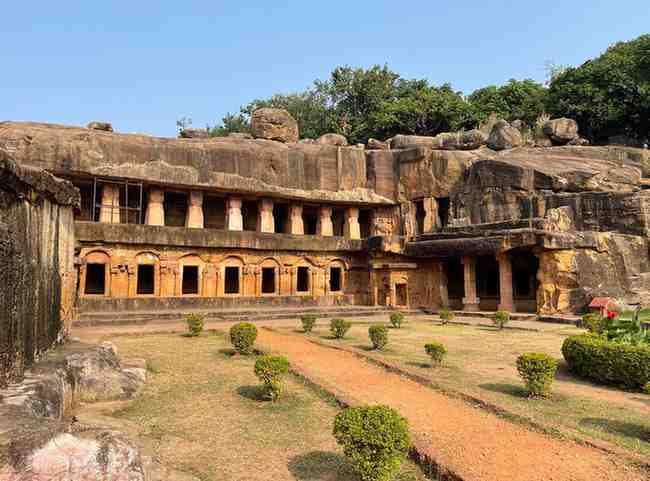
Khandagiri and Udayagiri caves are once again in the spotlight as Odisha plans to turn this ancient site into a world-class heritage tourism destination. According to media reports, the state has prepared a ₹100 crore proposal to develop the historic caves while improving the visitor experience. The move could give fresh global attention to one of India’s oldest and most important heritage landmarks.
These famous caves, located near Bhubaneswar, date back to the 2nd century BCE and are more than 2,200 years old. They are closely linked with Jain history and the legacy of the Mahameghavahana dynasty. For many visitors, the site is already a symbol of Odisha’s rich cultural past, but the new plan aims to present it in a bigger, more modern, and more accessible way.
Why Khandagiri and Udayagiri Caves Matter
The importance of Khandagiri and Udayagiri caves goes beyond tourism. They reflect the artistic, spiritual, and political history of ancient Kalinga. Media reports say the proposed redevelopment will include grand statues of Kalinga rulers, including Mahameghavahana Kharavela, a legendary name in Odisha’s history. This could help visitors connect more deeply with the region’s heritage instead of seeing the caves as just another old monument.
The development plan is expected to add several modern attractions and facilities. These may include walking parks, musical fountains, improved lighting, dedicated heritage pathways, and an open-air amphitheater with a lecture center. Such additions could make the area more engaging for families, students, researchers, and tourists from across India and abroad.
Another major focus of the project is accessibility. Reports suggest that ramps and lifts may be added for elderly and differently-abled visitors. This is an important step because many historic places remain difficult to explore for people with mobility challenges. If implemented well, the plan could make the site more inclusive without taking away its historic charm.
Interestingly, the project is not only about beautification. To protect the heritage zone, the roads currently passing through the hills may be permanently closed. This decision could help reduce traffic pressure, pollution, and damage to the surrounding area. In the long run, preserving the natural and historical environment may prove just as important as creating new attractions.
If the proposal gets final approval and is carried out carefully, the caves could emerge as one of Odisha’s biggest heritage tourism success stories. The challenge will be to strike the right balance between modern development and historical preservation. If that balance is achieved, Khandagiri and Udayagiri may soon offer visitors not just a glimpse of the past, but a complete cultural experience.
Odisha’s reported plan for the Khandagiri and Udayagiri caves shows a strong effort to preserve history while making it more attractive and accessible for modern travelers. With better infrastructure, heritage-focused development, and improved visitor facilities, this ancient site could become a landmark destination for both tourism and cultural learning.