

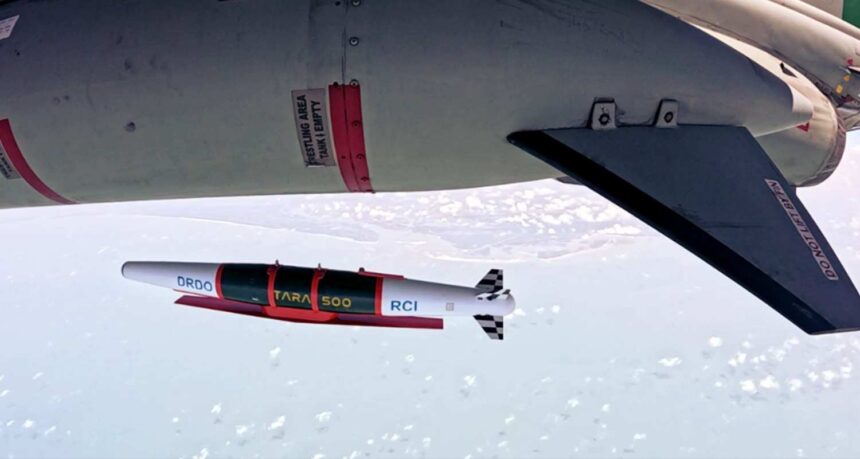
TARA Weapon Test in Odisha has brought fresh national attention to the state after DRDO and the Indian Air Force carried out the maiden flight-trial of the Tactical Advanced Range Augmentation weapon off the Odisha coast on May 7, 2026.
The successful trial is important not only for India’s defence plans but also for Odisha, because the event happened just off its shoreline and quickly became a major national defence story.
India is working hard to build more advanced weapons at home, and TARA is being seen as a strong step in that direction. The official release describes TARA as a modular range-extension kit and India’s first indigenous glide weapon system that can convert unguided warheads into precision-guided weapons.
Why TARA Weapon Test in Odisha Matters
The biggest reason this test matters is that it shows progress in India’s effort to develop smarter air-delivered weapons without depending fully on foreign systems. According to the official statement, TARA was designed by Research Centre Imarat in Hyderabad along with other DRDO laboratories. The system is meant to improve the lethality and accuracy of a relatively low-cost weapon against ground targets.
For Odisha readers, this is also a locally relevant story because the maiden flight-trial took place off the state’s coast. That gives Odisha a direct connection to one of India’s latest indigenous defence milestones.
What Is TARA
TARA stands for Tactical Advanced Range Augmentation. In simple words, it is a smart glide kit that helps turn a normal bomb or warhead into a more accurate, longer-range strike weapon. This matters in modern warfare because aircraft can attack targets from a safer distance instead of flying too close to enemy defences.
The official statement calls it a range-extension kit, which means it is designed to help the weapon travel farther than a standard unguided bomb. Defence reports also describe TARA as a precision-guided system linked with modern navigation and terminal guidance technologies for better targeting. Even though secondary reports vary on the exact seeker details, they agree that the aim is higher accuracy and stronger standoff strike capability.
Why This Test Is Important for India
This trial is a big sign of India’s push for defence self-reliance. Defence Minister Rajnath Singh called the successful test a significant milestone in boosting the capabilities of the Indian Armed Forces. The official release also said production activity has already started with development-cum-production partners and other Indian industries.
That is important because a weapon is truly useful only when it can move from testing to manufacturing and deployment. Reports also say earlier captive trials had been carried out on Jaguar aircraft, and future integration is being prepared for other platforms such as the Su-30MKI, Mirage 2000 and LCA Tejas. If that happens at scale, TARA could become a flexible strike option for multiple Indian Air Force aircraft.
TARA is not just another defence headline. It represents a wider shift in India’s military planning toward smarter, more precise and longer-range weapons developed within the country. When a system like this succeeds in early flight trials, it often opens the door for more tests, more platform integration and stronger operational use later.
For Odisha, the story has extra value because the successful trial happened off its coast and places the state in an important national defence update. For India, it signals that locally developed standoff weapons are moving from concept to real-world testing. What looks like one trial today may become part of a much larger change in India’s future air power.