
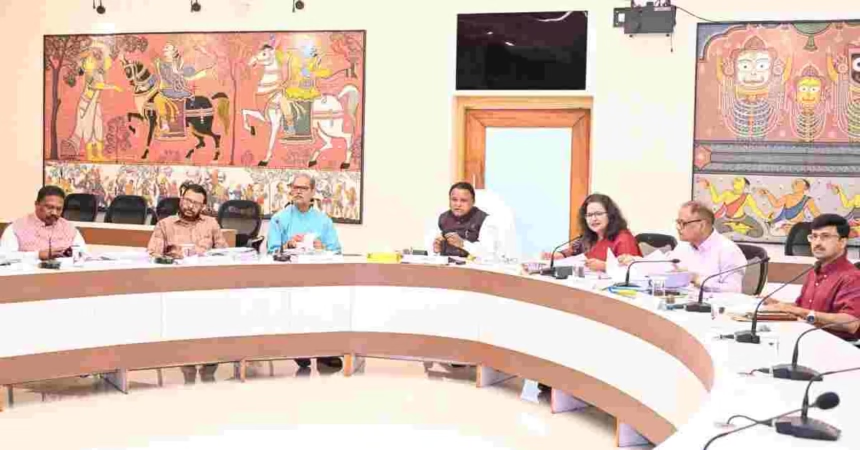
The Odisha Cabinet Approves 11 Welfare Proposals in a landmark meeting held on April 10, 2026, at Lok Seva Bhawan in Bhubaneswar. Chaired by Chief Minister Mohan Charan Majhi, the decisions span five key departments and signal a strong commitment to rural empowerment, sustainable agriculture, and modern infrastructure. These initiatives aim to transform lives across Odisha by addressing critical needs in irrigation, drinking water, public transport, power supply, and administrative efficiency.
This proactive step aligns with the state government’s vision of inclusive growth, ensuring that remote villages and farming communities benefit from reliable resources. With a combined financial outlay running into thousands of crores, the approvals are expected to create employment, boost agricultural productivity, and improve quality of life for lakhs of citizens.
The 11 proposals, drawn from the departments of Water Resources, Panchayati Raj & Drinking Water, Transport, Energy, and Labour & ESI, focus heavily on practical, ground-level solutions. Chief Secretary Anu Garg highlighted that these measures will usher in a new era of rural development, directly benefiting farmers and villagers once implemented.
A major highlight is the advancement of the Parbati Giri Mega Lift Irrigation Scheme (Phase II), with an overall outlay of approximately ₹10,759 crore targeting 2.63 lakh hectares statewide. Using advanced pressurised pipeline systems, the scheme will lift water from rivers and reservoirs to upland areas, enabling micro-irrigation and crop diversification beyond traditional paddy.
Specific clusters approved include:
Cluster-27 (Sambalpur): Lifting water from Hirakud reservoir to irrigate 6,210 hectares across 54 villages.
Cluster-30 (Sonepur/Subarnapur): Drawing from the Tel and Mahanadi rivers for 6,025 hectares in 47 villages.
Cluster-37 (Jajpur): Covering 5,950 hectares across 73 villages using water from the Kharasua and Brahmani rivers.
Cluster-38 (Keonjhar-Mayurbhanj): Benefiting 4,280 hectares in 33 villages through sources like the Kanpur Main Canal, Ardei Nadi, and Balisudra River.
Additionally, the Hadua Irrigation Project in Cuttack district received the green light for an underground pipeline system serving 3,641 hectares across 86 villages in Baramba, Narsinghpur, and Tigiria blocks. These projects will reduce drought vulnerability, increase farm incomes, and promote high-value crops in previously water-scarce regions.
Complementing irrigation efforts, the Cabinet approved the Rural Drinking Water Supply O&M Policy 2026. This comprehensive framework ensures sustainable operation and maintenance of rural water systems under the Jal Jeevan Mission. It clearly defines roles for the Rural Water Supply and Sanitation wing, district administrations, gram panchayats, and village water committees. Key features include user fees for maintenance funds, local repair teams, regular water quality testing, and digital tools like SCADA and IoT for real-time monitoring via a centralised command centre. Importantly, the policy operates within existing budgets, safeguarding past investments without extra fiscal strain while delivering reliable “Har Ghar Jal” services.
In the transport sector, the ambitious Atal Bus Stand Scheme received ₹3,400 crore until FY 2031-32. This will modernise 318 bus stands across district, sub-divisional, block, urban, and tourist locations. Categorized into A, B, and C classes based on demand, the scheme integrates existing facilities with enhanced passenger amenities, eco-friendly designs, and revenue-generating models. It promises better connectivity, tourism promotion, and job opportunities for locals and self-help groups.
Power infrastructure also got a significant lift with approval for a 2×500 MVA, 400/220/33 kV GIS substation at Basudevpur in Keonjhar at an estimated cost of ₹1,647 crore. This project, funded partly by state equity and institutional loans, will strengthen transmission lines to meet rising industrial and domestic demand in the mineral-rich Joda-Barbil-Palaspanga belt. Completion is targeted between FY 2026-27 and 2028-29, supporting Odisha’s industrial growth while ensuring stable electricity for households.
ALSO READ | Epic Infrastructure Revolution Odisha 12 Monumental Projects Worth Thousands of Crores in 2025
The remaining proposals focus on streamlining services through amendments to labour and ESI-related rules. These include exemptions for Assistant Labour Officers and Rural Labour Inspectors appointed before 2019 from certain departmental exams, updates to recruitment methods for ministerial and medical staff in ESI facilities, and alignment of legal syllabi with new criminal laws (Bharatiya Nyaya Sanhita, etc.). Such reforms enhance transparency, career progression, and service delivery in government departments.
Collectively, these Odisha Cabinet Approves 11 Welfare Proposals represent a holistic approach to development. Farmers in upland areas will gain assured irrigation for Kharif and Rabi seasons, while villagers enjoy dependable drinking water and improved connectivity through upgraded bus stands. Enhanced power supply will catalyse local industries, and administrative tweaks will make governance more responsive.
Experts note that these steps will not only increase agricultural output and rural incomes but also reduce migration to urban centres by creating on-ground opportunities. The emphasis on digital monitoring and sustainable O&M models ensures long-term viability, preventing infrastructure decay a common challenge in rural projects.
Chief Minister Mohan Charan Majhi’s leadership in prioritising these welfare measures reinforces the government’s people-centric agenda. As Odisha moves towards its 2036 vision and aligns with national goals like Viksit Bharat, today’s approvals mark a decisive stride in building a resilient, prosperous rural economy.
In summary, the April 10 cabinet decisions demonstrate proactive governance that balances immediate needs with sustainable growth. Residents and stakeholders eagerly await the rollout, which promises tangible improvements in daily life across the state.