InfoDean.comInfoDean.comInfoDean.com
Notification Show More
Font ResizerAa
  • Odisha
    • Jajpur
  • Education
  • Personal Finance
  • Lifestyle
  • Updates
  • Food Stories
  • Web Stories
Font ResizerAa
InfoDean.comInfoDean.com
  • Odisha
  • Education
  • Personal Finance
  • Lifestyle
  • Updates
  • Food Stories
  • Web Stories
Search
  • Odisha
    • Jajpur
  • Education
  • Personal Finance
  • Lifestyle
  • Updates
  • Food Stories
  • Web Stories
Follow US
© 2023–2026 InfoDean . All rights reserved.

Home | Education | Understanding Neuroeducation: A New Way to Learn

Education

Understanding Neuroeducation: A New Way to Learn

Mohammad Sultan
Last updated: 8 April 2026 01:26
Mohammad Sultan
Share
3 Min Read
neuroeducation
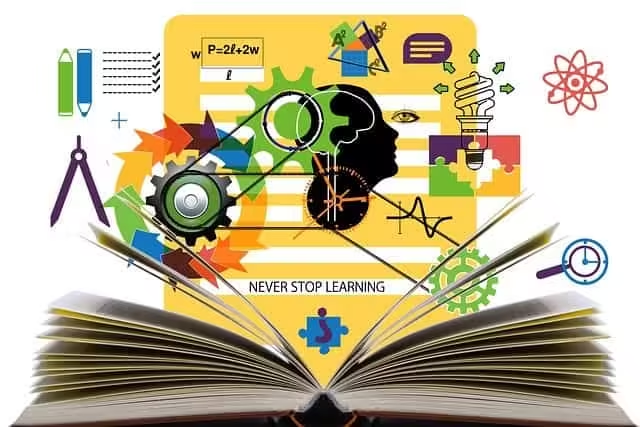
Understanding Neuroeducation: A New Way to Learn | Image Source : Pixabay

Neuroeducation is an exciting field that combines neuroscience, psychology, and education to improve how we teach and learn. By understanding how the brain works, educators can create better learning environments and strategies that help students succeed. Let’s explore in this Education what neuroeducation is all about and how it can benefit both teachers and learners.

Contents
  • What is Neuroeducation?
  • Why is Neuroeducation Important?
  • How Can Neuroeducation Be Applied in the Classroom?
  • Conclusion

What is Neuroeducation?

Neuroeducation, also known as educational neuroscience, focuses on applying research from neuroscience to educational practices. The main goal is to create evidence-based teaching methods that align with how our brains naturally learn. This approach helps educators understand the processes of memory, attention, motivation, and problem-solving, which are crucial for effective learning.

Why is Neuroeducation Important?

Brain Plasticity: Our brains are capable of changing and adapting throughout our lives. This means that learning is not fixed; instead, it can grow and develop with experience. Understanding this can help teachers create lessons that encourage growth and resilience in students.

Emotional Impact: Emotions play a significant role in learning. Positive emotions can enhance focus and retention, while negative emotions can hinder learning. By fostering a supportive and engaging classroom environment, educators can help students feel more motivated and connected to the material.

Personalized Learning: Neuroeducation emphasizes that each learner is unique. By recognizing individual differences in learning styles and preferences, teachers can tailor their approaches to meet the needs of all students, making learning more effective and enjoyable.

How Can Neuroeducation Be Applied in the Classroom?

Multi-Sensory Learning: Engage multiple senses during lessons. For example, use visual aids, hands-on activities, and auditory materials to help students grasp concepts better. This approach strengthens neural connections and improves memory retention.

Active Learning: Encourage students to participate actively in their learning process through discussions, problem-solving tasks, and collaborative projects. Active engagement helps solidify understanding and makes learning more enjoyable.

Feedback and Reflection: Provide timely and constructive feedback to students. Encourage them to reflect on their learning experiences, which can enhance self-regulation and motivation.

Use Technology: Integrate technology into lessons to create interactive and engaging learning experiences. Tools like educational apps and online resources can cater to various learning styles and keep students engaged.

Conclusion

Neuroeducation is a powerful tool for enhancing teaching and learning. By understanding how the brain works and applying this knowledge in the classroom, educators can create more effective and enjoyable learning experiences for their students. As this field continues to grow, it holds the promise of transforming education for the better.


Join us on WhatsApp

TAGGED:neuroeducation
SOURCES:The Mag - Neuroeducation Blog | Babaoo Trends in Education: Neuroeducation - SKOLA English in London6 Ways to Use Neuroeducation to Improve Student Learning - EDU BlogNeuroeducation: Mind, Brain, and Language LearningUniting Neuroscience and Education: The Foundational Principles of Neuroeducation
Share

Recent posts

Kalamandal Auditorium Bhubaneswar modern cultural complex with main dome and open-air theatre
Kalamandal Auditorium Bhubaneswar: Odisha’s Biggest Cultural Venue Nears Completion
3 May 2026
Subhadra Yojana May 4 payment for over 1.23 lakh left-out beneficiaries in Odisha
Subhadra Yojana May 4 Payment: Over 1.23 Lakh Odisha Beneficiaries to Get Money
3 May 2026
Odisha Auto Appeal System to ensure time-bound government services in Odisha by May 2026
Odisha Auto Appeal System to Start by May 2026, Big Relief for Citizens Seeking Govt Services
1 May 2026
Rohit Sharma net worth in 2026 and his luxury lifestyle
Rohit Sharma Net Worth in 2026: From ₹275 School Fees to a ₹214 Crore Empire
30 April 2026
FSSAI pan masala packaging proposal with paper and cellulose alternatives replacing plastic packaging
FSSAI Pan Masala Packaging Proposal: Paper Alternatives May Replace Plastic
30 April 2026

You Might Also Like

Bharat Mandapam
Education

Bharat Mandapam An Architectural Marvel in India

8 April 2026
tcs nqt
Education

What is TCS NQT? National Qualifier Test or TCS NextStep

8 April 2026
GATE 2025 registration extended deadline notice.
Education

GATE 2025 Registration Extended Deadline: Apply by October 11

8 April 2026
Pradhan Mantri Mudra Yojana
Education

Pradhan Mantri Mudra Yojana: Empowering Small Businesses and Entrepreneurs in India

19 April 2026
InfoDean.comInfoDean.com
Follow US
© 2026 InfoDean. All Rights Reserved.
  • About-InfoDean
  • Contact
  • Privacy Policy
  • Disclaimer
  • Fact-Checking Policy
  • Terms & Services
Welcome Back!

Sign in to your account

Username or Email Address
Password

Lost your password?