

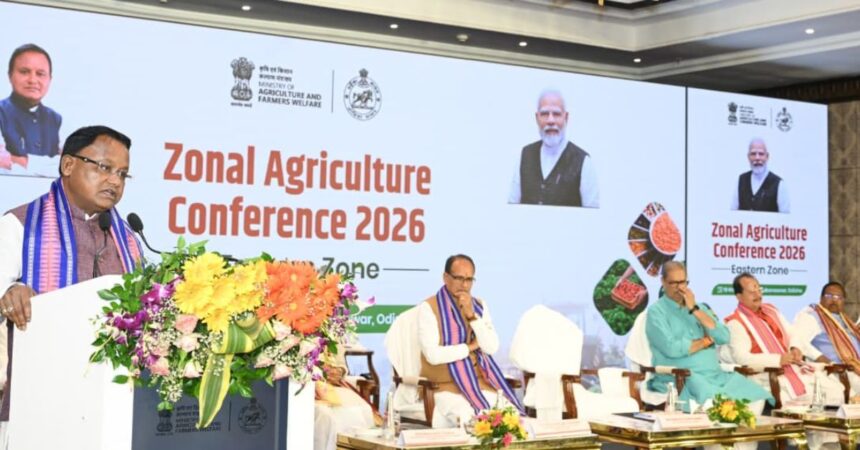
Eastern Zonal Agriculture Conference 2026 has become an important event for the future of farming in Eastern India. Held in Bhubaneswar, the conference saw Hon’ble Chief Minister Shri Mohan Charan Majhi reaffirm Odisha’s strong commitment to sustainable agriculture, farmer welfare, and long-term agricultural growth. The event also highlighted Odisha’s growing role in shaping a stronger and more self-reliant farming system for the region.
The conference brought together key discussions around the future of agriculture in Odisha, Bihar, Chhattisgarh, Jharkhand, and West Bengal. One of the biggest takeaways was the decision to prepare a comprehensive agricultural roadmap for these five states. This roadmap is expected to guide policy, improve productivity, strengthen market systems, and support farmers with better opportunities in the years ahead.
This conference is not just another government meeting. It is a serious step toward building a resilient agricultural ecosystem across Eastern India. Agriculture remains the backbone of millions of families in this region, and any strong policy decision can directly improve livelihoods, food security, and rural development.
Odisha received appreciation from the Centre for its progress in agriculture and paddy procurement. This recognition is important because it shows that the state’s efforts are producing real results. The state has made major gains by improving support systems for farmers and ensuring better returns for their produce.
Strong Focus on Sustainable Farming
A major theme of the conference was sustainable agriculture. The Odisha government stressed the need to promote natural farming and reduce the use of chemical fertilisers. This move is important for protecting soil health, improving crop quality, and reducing long-term environmental damage.
Healthy soil is the foundation of good farming. By encouraging natural methods, Odisha is working toward safer food, lower input costs, and better farming practices for future generations. This approach also supports the larger goal of making agriculture more climate-resilient.
Another interesting point discussed at the conference was the revival of traditional “Forgotten Foods” at the block level. This effort can help preserve indigenous food heritage, improve nutrition, and bring back local crops that were once a part of daily life. It is a smart way to connect agriculture with culture, health, and sustainability.
Farmers Support
Farmer welfare remained at the center of the conference. Around 19 lakh farmers have benefited from the ₹3100 Minimum Support Price for paddy under the Samruddha Krushak Yojana. This support gives farmers better income security and rewards their hard work.
In addition, more than 51 lakh farmers are receiving financial assistance under CM KISAN along with PM-KISAN support. This kind of direct financial help can make a major difference, especially for small and marginal farmers who often struggle with rising costs and uncertain market conditions.
Such support systems show that Odisha is trying to create a farming model where farmers are not left alone. Instead, they are being supported through price benefits, income assistance, and improved access to infrastructure.
The conference also placed strong emphasis on developing cold storages, agri-infrastructure, Farmer Producer Organizations, and better market linkages across the state. These are essential for reducing post-harvest losses and helping farmers get fair prices.
Cold storage facilities can protect perishable produce and reduce waste. Stronger agri-infrastructure can improve transport, storage, and processing. FPOs can empower farmers by helping them work together, improve bargaining power, and connect directly with bigger markets.
Better market linkages mean farmers can move beyond local limitations and access wider business opportunities. This can increase profits and encourage diversification in agriculture.
Koraput Coffee
One of the most exciting highlights of the conference was the focus on expanding coffee cultivation and branding Koraput Coffee for global markets. This is a major opportunity for Odisha.
Koraput Coffee already has a unique identity, and stronger branding can help it reach more consumers in India and abroad. This step can boost tribal livelihoods, create rural employment, and increase Odisha’s presence in premium agricultural markets.
It also shows that Odisha is not only thinking about food crops but also about value-added agriculture and export potential. This wider vision can help farmers earn more through specialized and branded products.
The roadmap emerging from the conference is expected to strengthen Prime Minister Shri Narendra Modi’s “Purvodaya” vision for Eastern India. The idea behind Purvodaya is to unlock the full development potential of Eastern states and make them stronger contributors to India’s growth story.
Agriculture can play a huge role in achieving that vision. With the right mix of policy planning, farmer support, sustainable practices, and infrastructure development, Eastern India can become a major force in the country’s agricultural future.
Odisha’s active role in this conference shows that the state is ready to lead from the front. By combining tradition, technology, welfare, and long-term planning, it is setting an example for the region.
In summary The Eastern Zonal Agriculture Conference 2026 in Bhubaneswar has sent a clear message: the future of farming in Eastern India will depend on sustainability, farmer-first policies, and strong regional cooperation. From MSP support and financial assistance to natural farming, Forgotten Foods, infrastructure growth, and Koraput Coffee branding, the conference covered many important areas that can shape the next phase of agricultural progress.
For Odisha, this is more than a conference achievement. It is a signal of intent. The state is moving toward a more resilient, self-reliant, and future-ready agricultural system that can benefit millions of farmers and strengthen the entire region.