
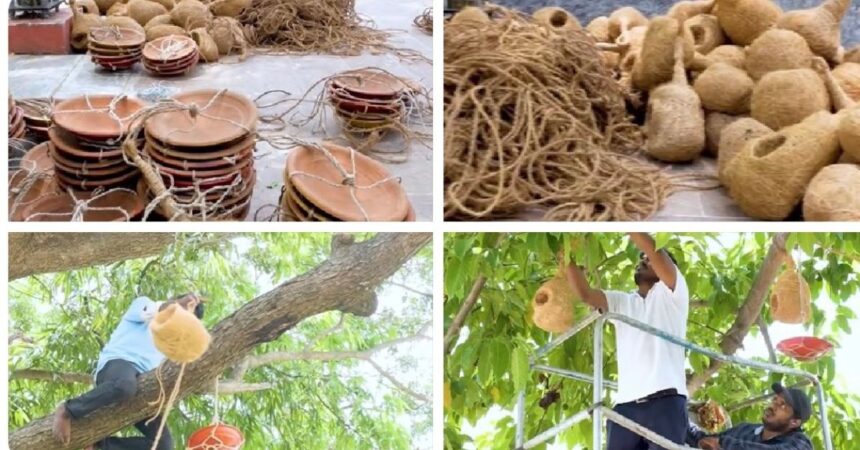
Bhubaneswar bird conservation is getting attention for a heartwarming and meaningful reason. In a beautiful summer initiative, the Bhubaneswar Municipal Corporation BMC has installed artificial nests and water pots on trees to help birds survive the extreme heat. At a time when rising temperatures are making life harder for urban wildlife, this thoughtful step shows how cities can care for nature in practical ways.
What makes this effort even more special is the material used for the nests. These artificial bird homes are made from recycled coconut coir collected through waste-to-wealth activities. Instead of letting natural waste go unused, it has been turned into something valuable that protects birds and supports the environment. This is a smart example of how sustainability can solve real-life problems.
How Bhubaneswar Bird Conservation Is Helping Birds
During the summer season, birds often struggle to find safe shelter and clean water in cities. Trees are fewer, natural nesting spaces are limited, and heat can become dangerous for small birds. By placing nests and water pots on trees, BMC is giving birds a better chance to rest, hydrate, and stay safe.
This initiative also reminds people that urban development and environmental care can go together. Small actions like these may look simple, but they create a big impact over time. When city authorities think about birds, greenery, and waste management together, they build a healthier and kinder urban space for all living beings.
Lesson in Sustainability
The use of recycled coconut coir makes this project more than just a bird-saving campaign. It turns waste into a useful resource and promotes eco-friendly thinking. This “waste-to-wealth” model is inspiring because it shows that conservation does not always need expensive solutions. Sometimes, local materials and creative ideas are enough to make a difference.
Bhubaneswar’s effort is also a message for other cities across India. Urban areas are growing fast, and with that growth comes a responsibility to protect biodiversity. If more cities adopt similar ideas, they can support birds and other small creatures while also reducing waste and improving environmental awareness.
Odisha is once again showing how local action can inspire a larger change. This bird-friendly step by BMC is not just about nests and water pots. It is about compassion, sustainability, and responsible city planning. It proves that when innovation meets care for nature, even a simple idea can become a powerful example.
In a world where environmental problems often feel too big, Bhubaneswar offers a refreshing story of hope. By helping birds survive the summer with recycled nests and water support, the city is setting a beautiful example of urban conservation done right.