
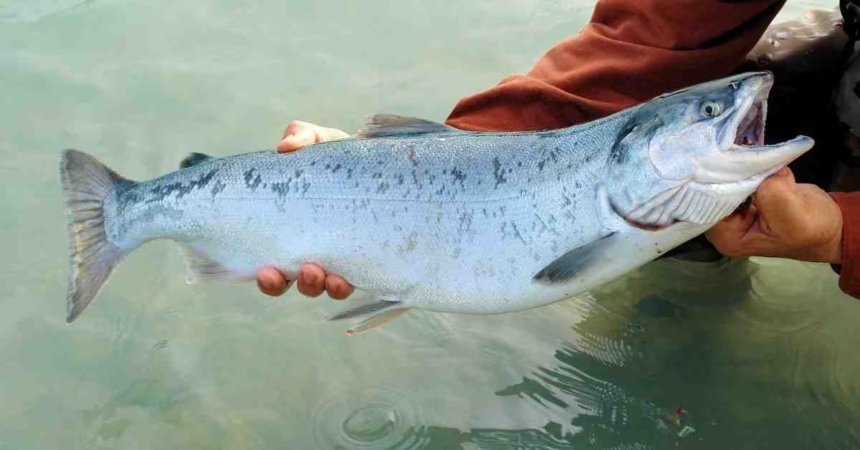
Salmon fish is a cold-water fish from the Salmonidae family and is known for its rich taste, pink flesh, and high nutritional value. In India, the name salmon may refer to imported Atlantic salmon or to Indian salmon, which is often sold in coastal markets under local trade names such as Rawas. Because of its premium image and high demand, Salmon fish is popular among seafood lovers, restaurants, and health-conscious buyers.
Salmon Fish in India
Salmon fish is available in India, but its market is divided into two parts: imported Atlantic salmon for premium buyers and Indian salmon for local coastal trade. Fisheries information shows that Indian salmon is especially linked with Maharashtra and Gujarat, and seasonal abundance has also been noted off West Bengal, Odisha, and Gujarat. This means coastal communities are familiar with local salmon varieties, while imported Salmon fish is more commonly seen in big cities, supermarkets, and hotels.
According to Report As of April 2026, Salmon fish in India is priced at roughly ₹899.78 to ₹1,472.88 per kg in major markets such as New Delhi and Mumbai, although imported premium cuts may cost more. A common way to prepare Salmon fish is pan-searing because its flesh stays firm and flavorful during cooking. It is also widely chosen for premium seafood meals because of its rich taste and soft texture.
Health Benefits of Salmon
Salmon fish is valued for high-quality protein and omega-3 fatty acids, which are two of the main reasons it is considered a healthy seafood choice.These nutrients support heart health, help reduce inflammation, and may improve brain function and memory. Salmon also contains potassium and other useful nutrients that help the body function properly.

For people who want a balanced diet, Salmon fish can be a good option because it gives energy, supports muscles, and helps maintain overall wellness. Its nutrition profile is one of the biggest reasons it is popular in both home kitchens and premium restaurants.
Farming
The farming of Salmon fish usually starts in freshwater hatcheries, where eggs hatch and young fish are raised in tanks. After that, the fish are moved as smolts to sea cages or net pens, where they continue growing for around 12 to 24 months until harvest. This farming method helps producers raise large volumes of fish in a controlled system.
The feed used for Salmon fish is usually made into pellets. These pellets commonly contain fishmeal and plant proteins such as soybean, corn gluten, canola, and pea meal, while some feed formulas also include krill, shrimp meal, algae oil, or poultry by-product meal. One study on market-size Atlantic salmon reported an average harvest weight of about 4.2 kg.
Transport, Storage and Market
In modern seafood trade, Salmon fish is transported internationally by air cargo and refrigerated trucks so that freshness is maintained from origin to destination. It is commonly packed in insulated foam boxes with ice or in reusable tubs that use slurry ice for temperature control. Fresh chilled Salmon fish is usually kept around 0°C to 2°C, while superchilled handling may use temperatures around -0.5°C to -1°C to preserve quality for longer.
The global Salmon fish market has been estimated at about USD 23.52 billion in 2026. The countries earning the highest export revenue from salmon include Norway, Sweden, Chile, the United Kingdom, and Canada. Strong international demand and advanced cold-chain logistics are two major reasons why Salmon fish remains one of the world’s most valuable seafood products.
Demand and Consumer Choice
Salmon fish is also becoming popular because modern consumers want seafood that is tasty, easy to cook, and rich in nutrition. In India, awareness of salmon is not limited only to big cities, because coastal fishing communities already know local Indian salmon varieties, while imported Atlantic salmon is more familiar in urban retail markets and premium restaurants. This difference creates two separate markets: one for traditional coastal buyers and another for high-end city consumers.
Also Read | Fig: Benefits, Tree, Uses, Pregnancy, and Simple Facts
Another important point is consumer preference for fish size and cut. Commercial salmon are often harvested at market size of around 4.2 kg, which makes them suitable for fillets, steaks, and portion cuts sold in seafood shops and restaurants. Buyers usually prefer medium to large fish because these sizes provide more flesh, better presentation, and easier cutting for cooking. Salmon fish is commonly prepared by pan-searing, grilling, baking, or serving as fillets in premium meals, depending on local taste and cooking style.
The future of Salmon trade looks strong because global demand remains high and cold-chain transport has made it easier to move fresh fish safely across countries. With better storage, packaging, and growing health awareness, Salmon fish is likely to attract even more buyers in the Indian seafood market.