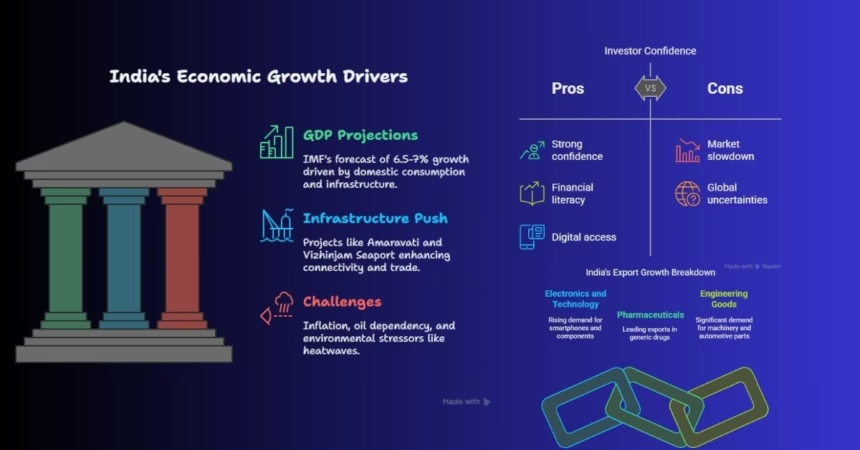
India economic growth 2025 is capturing global attention as the nation continues its remarkable ascent on the world stage. With exports surging, a thriving live events economy, and record stock market participation, India is poised for a dynamic year ahead. This article dives into the numbers, trends, and challenges shaping India’s economic trajectory in 2025.
Exports: The $824.9 Billion Success Story
India’s export sector has been a cornerstone of its economic growth, achieving a 6.01% increase to $824.9 billion in the fiscal year 2024-25, according to the Reserve Bank of India (RBI). This growth reflects strength in high-demand sectors:
Electronics and Technology: Rising global demand for Indian smartphones and components.
Pharmaceuticals: India’s role as the “pharmacy of the world” continues, with generic drugs leading exports.
Engineering Goods: Heavy machinery and automotive parts saw significant overseas demand.
According to The Indian Express Services exports, particularly IT and software services, remain a powerhouse, bolstered by India’s digital infrastructure. However, challenges like geopolitical tensions and global supply chain disruptions could test this momentum. To sustain growth, India is diversifying markets, with increased focus on ASEAN and African nations.
| Indicator | Value/Projection |
|---|---|
| GDP Growth | 6.2–6.5% |
| Exports | $824.9 billion |
| New Stock Market Investors | 2.1 crore |
| Inflation | ~5% |
A Cultural and Economic Boom
The live events economy is electrifying India economic growth 2025 narrative. From the high-octane Indian Premier League (IPL) 2025 to cultural festivals like Karnataka’s Bhoota Kola, live events are driving urban consumption.
Economic Impact: A recent WAVES 2025 report projects India’s creator economy, tied to live events and digital content, influencing $1 trillion in consumer spending by 2030.
Job Creation: Events generate millions of jobs, from event planners to gig workers in hospitality and logistics.
Cultural Showcase: Festivals and concerts amplify India’s soft power, attracting global tourists.
This boom is fueled by rising disposable incomes and digital ticketing platforms, but infrastructure gaps and environmental concerns demand strategic planning.
Stock Market Surge: 2.1 Crore New Investors
India’s National Stock Exchange (NSE) welcomed 2.1 crore new investors in FY26 (April 2025–March 2026), a testament to growing financial literacy and digital access. Despite a market slowdown-likely due to global uncertainties-retail investor confidence remains strong.
Digital Platforms: Apps like Zerodha and Groww have democratized investing.
SEBI Initiatives: Investor education campaigns are empowering first-time traders.
Economic Optimism: Strong corporate earnings and infrastructure projects boost market sentiment.
However, risks like market volatility and inflation (around 5% in 2025) could challenge novice investors. Financial advisors recommend diversification and long-term strategies.
ALSO READ| Unified Pension Scheme Guaranteed Pensions for Government Employees
India economic growth 2025
India economic growth 2025 is supported by:
GDP Projections: The IMF estimates 6.2–6.5% GDP growth for FY25, driven by domestic consumption and infrastructure investments.
Infrastructure Push: Projects worth over ₹58,000 crore in Amaravati and the Vizhinjam Seaport enhance connectivity and trade.
Challenges: Inflation, oil import dependency, and environmental stressors pose hurdles.
Government policies, such as real-time food storage monitoring via the ‘Depot Darpan’ portal, aim to stabilize supply chains, while trade negotiations with the UK signal global ambition.
Opportunities and Challenges
India economic growth 2025 is a story of resilience and opportunity, but it’s not without hurdles. Diversifying export markets, investing in sustainable event infrastructure, and ensuring financial inclusion will be critical. As India balances growth with challenges like geopolitical tensions and climate risks, its ability to innovate and adapt will define its global economic stature.