
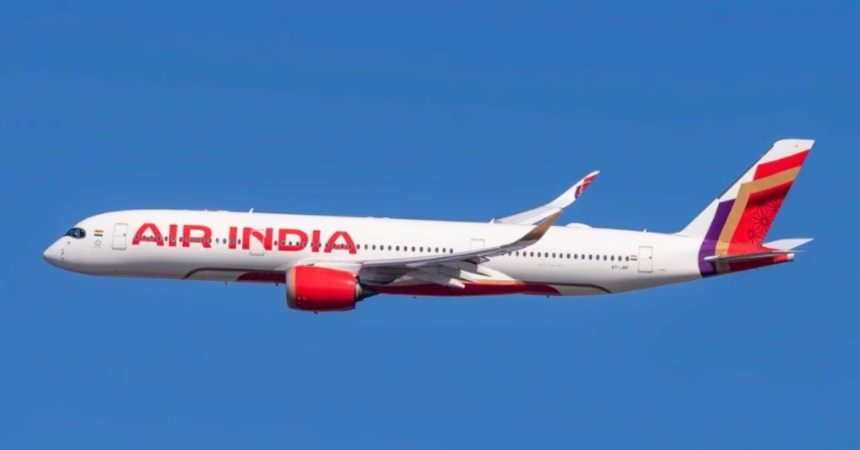
On June 12, 2025, a catastrophic aviation disaster shook Ahmedabad, Gujarat, when Air India Flight AI171, a Boeing 787-8 Dreamliner, crashed shortly after takeoff from Sardar Vallabhbhai Patel International Airport. The tragic incident, now referred to as the Ahmedabad plane crash, claimed numerous lives and left the nation in mourning. This article provides a detailed overview of the event, its immediate aftermath, and the ongoing response.
At approximately 1:38 PM IST, Air India Flight AI171, en route to London Gatwick, took off with 242 people on board—230 passengers and 12 crew members. Just five minutes later, at 1:43 PM, while flying at an altitude of 625–825 feet, the aircraft issued a mayday call before losing contact with air traffic control. The plane crashed into a residential area in Meghani Nagar, near the airport, striking a building—possibly an intern doctors’ hostel—and erupting into flames. The passenger manifest included 169 Indian nationals, 53 British nationals, one Canadian, and seven Portuguese nationals. Notably, former Gujarat Chief Minister Vijay Rupani was reportedly among the passengers.
The aircraft, registered as VT-ANB, was piloted by Captain Sumeet Sabharwal, with 8,200 hours of flight experience, and First Officer Clive Kundar, with 1,100 hours. Preliminary reports suggest a possible technical failure, such as an engine issue, bird strike, or even sabotage, though investigations are ongoing to determine the exact cause of the Ahmedabad plane crash.
The crash caused widespread devastation in the affected residential area. Thick black smoke billowed from the site, and debris was scattered across Meghani Nagar. The impact on the building and surrounding structures has raised concerns about additional casualties on the ground. The intensity of the crash and subsequent fire has led authorities to report slim chances of survivors, marking this as one of India’s deadliest aviation disasters since the 2020 Air India Express crash in Kozhikode, which killed 21 people.
The Ahmedabad plane crash also sent shockwaves through the aviation industry, with Boeing’s shares plummeting over 6.5% in premarket trading, reflecting investor concerns about the safety of the 787-8 Dreamliner model.
Emergency services were mobilized swiftly. Seven fire engines, multiple ambulances, and 90 National Disaster Response Force (NDRF) personnel from Gandhinagar, supplemented by three additional teams from Vadodara, were deployed to the site. A green corridor was established to facilitate the rapid transport of the injured to nearby hospitals. The airport halted all operations, and roads leading to the crash site were closed to support rescue efforts and ensure public safety.
Prime Minister Narendra Modi directed Civil Aviation Minister Ram Mohan Naidu and Home Minister Amit Shah to oversee the response in Ahmedabad. Air India established a hotline (1800 5691 444) to assist families seeking information about loved ones. The Tata Group, which owns Air India, issued a statement expressing condolences and pledging full support to those affected by the Ahmedabad plane crash.
The Directorate General of Civil Aviation (DGCA) and the Aircraft Accident Investigation Bureau have launched a thorough investigation into the Ahmedabad plane crash. Authorities are examining flight data recorders, air traffic control communications, and potential mechanical or external factors. The involvement of a high-profile figure like Vijay Rupani has intensified scrutiny, and speculation about sabotage has emerged, though no evidence has been confirmed.
The Indian government has promised transparency in the investigation, with updates expected as more details emerge. The findings will likely influence future aviation safety protocols and could have significant implications for Air India and Boeing.
The Ahmedabad plane crash has left the local community and the nation in a state of grief. Social media platforms, including X, have been flooded with condolences and calls for improved aviation safety. The tragedy has also sparked discussions about urban planning, as the crash site’s proximity to residential areas highlights the risks of airports located near densely populated zones.
Air India and the Tata Group have committed to supporting the victims’ families, while the government has assured comprehensive assistance for those affected. The closure of the airport has disrupted travel plans, with airlines rerouting flights and advising passengers to check for updates.
The Ahmedabad plane crash is a stark reminder of the fragility of air travel and the profound impact of such tragedies on communities and nations. As investigations continue, the focus remains on supporting the victims’ families, ensuring a thorough inquiry, and preventing future incidents. The nation mourns the loss of lives in this devastating event, and the world watches as Ahmedabad grapples with the aftermath of this tragedy.